All-Electric Buildings: Simple Tech, Maximum Savings
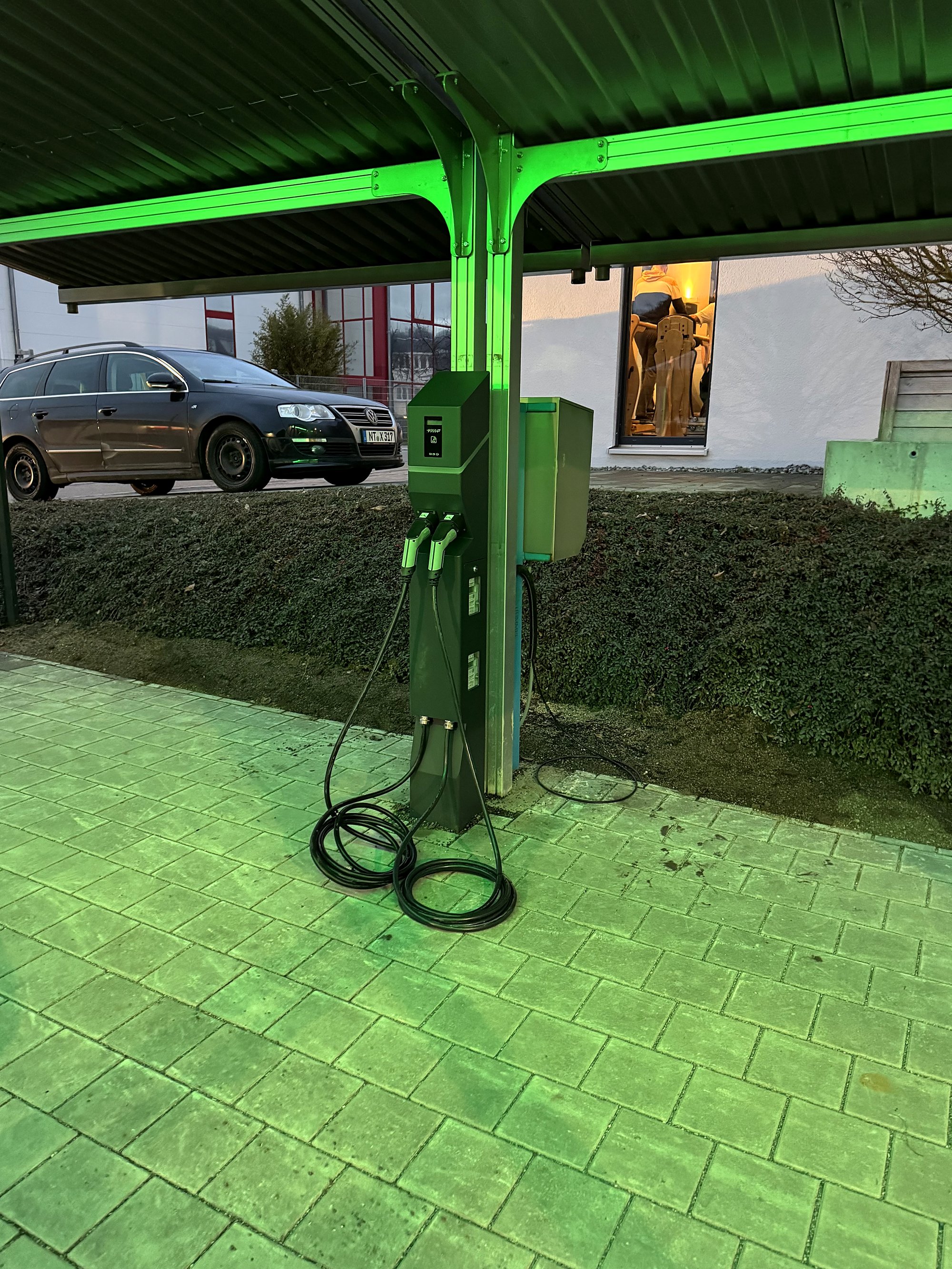
The future of building energy is surprisingly simple: electricity from the roof, heat from the wall, mobility from your own wallbox. What sounds like a pipe dream has long been technically mature and economically superior. The all-electric building foregoes fossil fuels, complex heating systems, and their associated maintenance costs – and instead relies on a system that achieves more with fewer components than conventional technology.
Infrared Heating: Simple, Efficient, Underestimated
Infrared heaters are among the most underestimated technologies in the heating transition. The facts speak for themselves: A recent study by the Fraunhofer Institute for Building Physics IBP (September 2024) compared the energy consumption of infrared heaters with a gas condensing boiler in so-called twin houses – two identical single-family homes. The result is clear.
The building with infrared heating consumed 32 percent less final energy compared to the gas condensing boiler – with identical thermal comfort.
The reason lies in physics: While conventional heating systems generate heat, distribute it through pipes, and produce significant losses, infrared heating converts electricity directly into radiant heat – without generation and distribution losses. The useful energy of both systems was almost identical (1,267 kWh vs. 1,305 kWh), but the gas heating required 1,876 kWh of final energy to achieve the same result.
CAPEX: Up to 70% Lower Investment Costs
The economic advantage begins with the purchase. The following table shows a comparison of investment costs for a typical single-family home:
| Heating System | Investment Costs (CAPEX) | Maintenance Costs/Year | Lifespan |
|---|---|---|---|
| Gas Condensing Boiler | 15,000 – 25,000 € | 300 – 500 € | 15 – 20 years |
| Heat Pump (Air-to-Water) | 20,000 – 35,000 € | 150 – 300 € | 15 – 20 years |
| **Infrared Heating** | **5,000 – 8,000 €** | **0 €** | **20 – 30 years** |
Infrared heating requires no pipes, no boiler room, no chimney, and no annual maintenance. Installation is limited to mounting the panels and connecting them to the power supply – an electrician can do this in a few hours. No moving parts mean: no wear parts, no chimney sweep costs, no malfunctions.
OPEX: Operating Costs That Pay Off
When it comes to ongoing costs, the decisive lever comes into play: your own photovoltaic system. Those who combine infrared heating with PV largely heat with their own solar power – at generation costs of 8 to 12 cents per kilowatt-hour instead of 30 to 35 cents from the grid.
Calculation example for a renovated single-family home (140 m²):
- Annual consumption of infrared heating: approx. 5,000 – 7,000 kWh
- Of which PV self-consumption (approx. 40%): 2,400 kWh × 0.10 €/kWh = 240 €
- Remaining grid purchase (approx. 60%): 3,600 kWh × 0.32 €/kWh = 1,152 €
- Total heating costs: approx. 1,392 €/year – without any maintenance
For comparison: A gas heating system incurs around 1,500 – 2,000 € in fuel costs plus 300 – 500 € in maintenance per year at current gas prices. A heat pump costs 800 – 1,200 € in electricity plus maintenance. Infrared heating is thus on par – at a fraction of the investment.
The All-Electric Concept: Three Components, One System
The all-electric building combines three technologies into an integrated energy system:
1. Photovoltaics on the roof – generates the electricity that powers everything. A typical 10 kWp system produces around 10,000 kWh per year, covering a significant portion of heating, hot water, household electricity, and e-mobility.
2. Infrared heating on walls and ceilings – converts solar power into comfortable radiant heat without loss. No pipes, no pumps, no maintenance. The panels are flat, quiet, and installed in a few hours.
3. Charging infrastructure for e-mobility – the wallbox turns the building into a filling station. Those who charge with solar power in the morning drive for 3 to 5 euros per 100 kilometers. Bidirectional charging also allows the electric car to be used as a battery storage unit to absorb peak loads.
CO₂ Footprint: Already Better Than Gas Today
The Fraunhofer study shows: Even with the current German electricity mix, the CO₂ footprint of infrared heating is only 4 percent higher than gas heating (482 vs. 463 kg CO₂eq. during the measurement period). With every additional wind turbine and solar panel in the grid, this balance automatically improves – while gas heating's emissions remain constant.
Those who also operate their own PV system already achieve nearly climate-neutral heating today. The all-electric building thus becomes an active component of the energy transition – not through renunciation, but through intelligent technology.
Why We Offer This
At REVOLUTION E, we support companies and building owners on their way to the all-electric building. Our experience shows: The biggest hurdle is not the technology – it is surprisingly simple. The biggest hurdle is rethinking: moving away from complex heating systems with burners, boilers, and chimneys, towards a solution that works with electricity, sun, and radiation.
Our offer includes:
- Building Quick Check: Analysis of the current state and potential assessment
- Economic Efficiency Calculation: CAPEX/OPEX comparison for your specific property
- System Planning: PV + infrared heating + charging infrastructure as an overall concept
- Implementation Support: From planning to commissioning
Sources:
- Fraunhofer IBP / IG Infrarot Deutschland e.V.: "Measurement-based comparison of heating energy consumption of a conventionally heated single-family house with a building with infrared heating", September 2024
- German Environment Agency (Umweltbundesamt): CO₂ emission factors for the German electricity mix, 2023
- IG Infrarot Deutschland: Studies by TU Dresden on the potential assessment of infrared heaters, 2023/2024
Connect with Frank Hummel on LinkedIn
For latest insights on energy, electrification and innovation